
The Peninsula Valdes is a small, remote corner of Argentina, a desolate and windswept coastline of Patagonia where the waves of the Atlantic Ocean break against the coastal cliffs. Yet, despite its isolation, Valdes is a UNESCO World Heritage Site and one of the most significant wildlife reserves in South America. The region is home to a plethora of wildlife, including the famous Peninsula Valdes orcas.
You can choose from a range of Patagonia tours and excursions to get up-close and personal with Patagonian wildlife. The peninsula’s geographic characteristics provide an amazing opportunity to watch orcas and other species in their natural environments.
About Peninsula Valdes Orcas
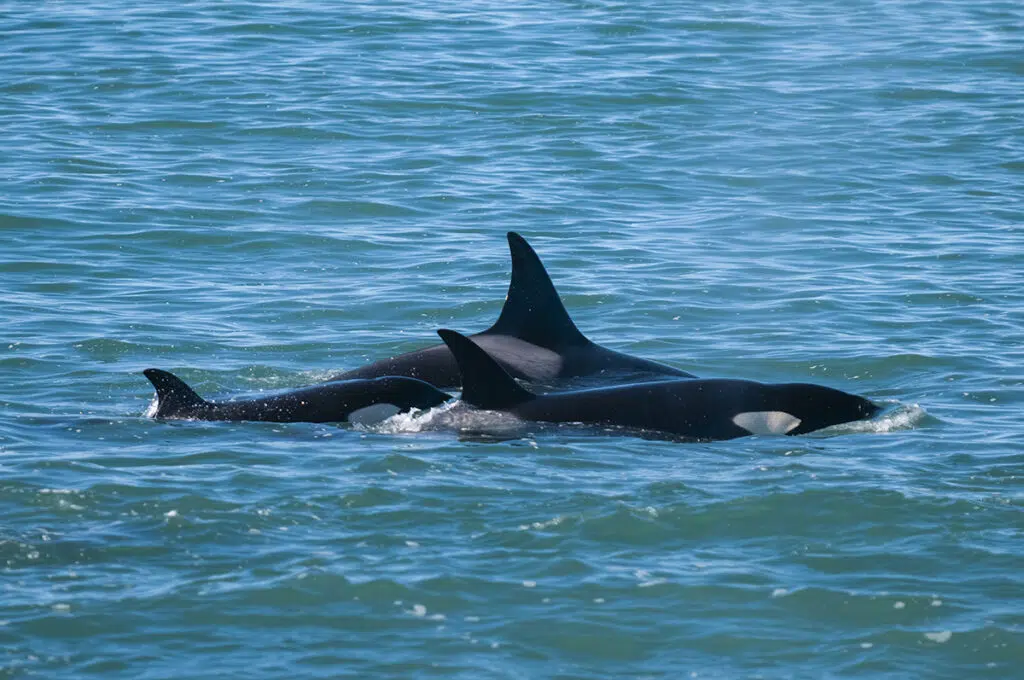
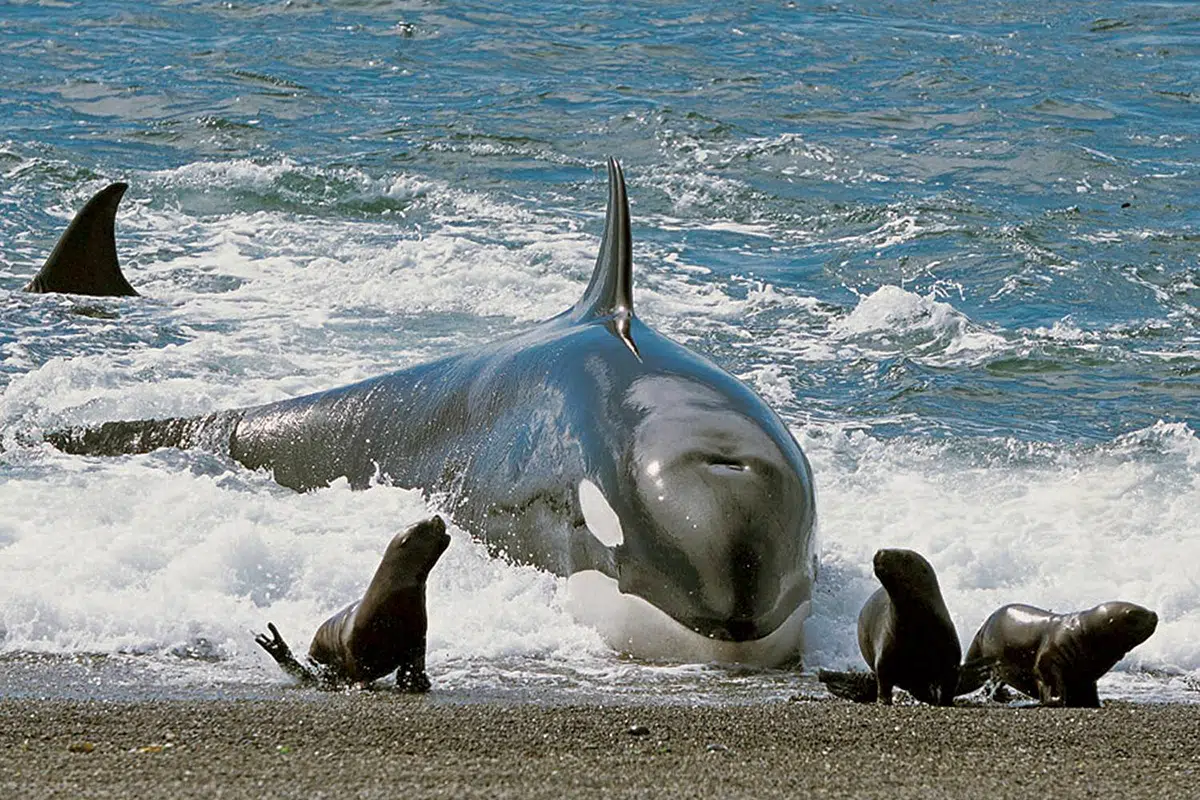
Peninsula Valdes orcas are a very special family. These innovative hunters have learned to beach themselves during the high tide to catch sea lion pups just learning to enter the water. This remarkable hunting technique is known as “intentional stranding.”
Intentional stranding by orcas is one of nature’s greatest spectacles. Peninsula Valdes is one of only two areas in the world where some orcas intentionally strand themselves on the beach in order to catch seal or sea lion pups.
Intentional stranding is a very unique behaviour practised by just a few resident whales, known as ‘stranders’ along the 3-kilometre stretch of coastline in Punta Norte Wildlife Reserve. This behaviour is taught by adult whales to the young members of the pod. In other words, these whales developed a unique culture of snatching seal pups from the beach by intentionally stranding themselves.
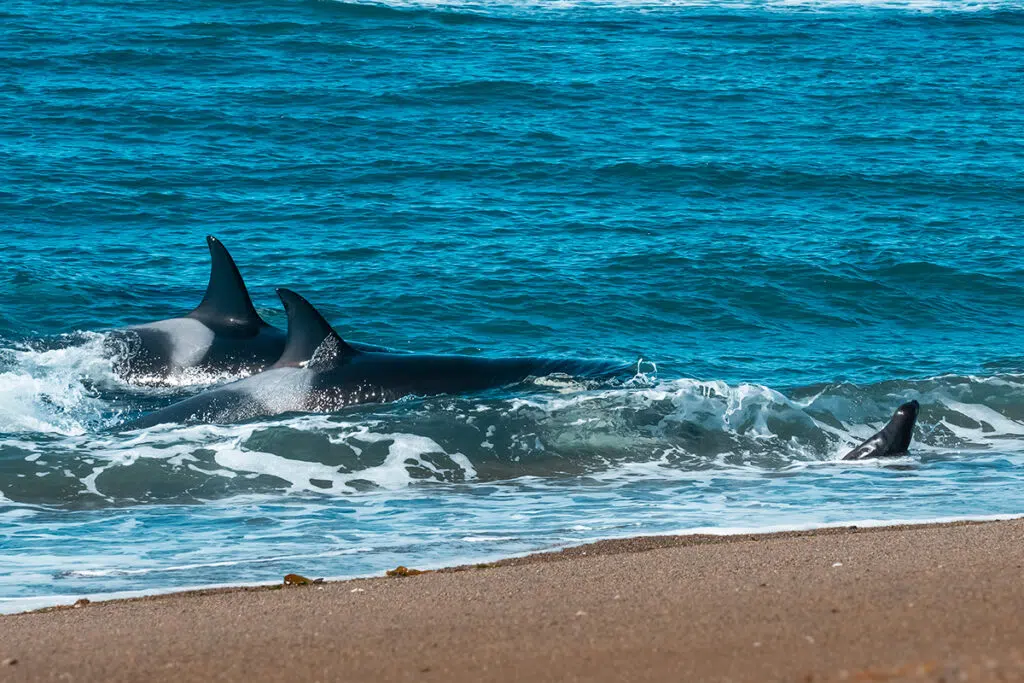
The orcas have a small window of time to successfully carry out their attacks – 3 hours before and 3 hours after high tide. At this time, the water is high enough to reach the seal resting area.
This behaviour involves the orcas swimming rapidly towards the shore and using the momentum of the wave to push themselves up onto the beach, where they quickly grab the seal pup. Then, they wait for the next wave and use the power of their bodies to ‘wriggle’ back into the sea. It is a risky hunting technique, and it is VERY DIFFICULT TO OBSERVE.
Where to see Peninsula Valdes Orcas from Land
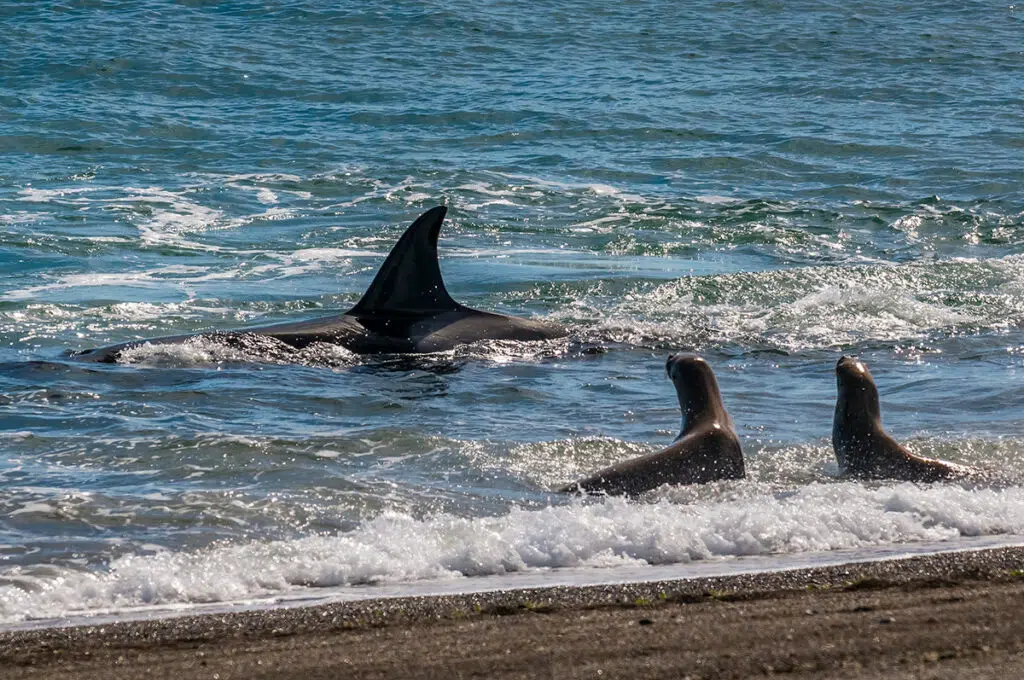
There are three key areas in the Valdes Peninsula for seeing orcas close to shore: Punta Norte at the northern tip, Caleta Valdes along the east coast, and Punta Delgada further south, all located within Peninsula Valdes Nature Reserve. If you hope to witness intentional stranding, Punta Norte is the place to go.
The closest town to both these locations is Puerto Piramides, which is a good place to base yourself for taking day trips to the orca-watching areas. It is a small town, but it has plenty of accommodation options. For the best chance of seeing the orcas, give yourself several days in the area and take repeated trips into the Reserve.
If you stay in Puerto Piramides, you’ll only have to pay the entrance to the Reserve once, since the town is located within the Peninsula Valdes Nature Reserve.
Tours to Observe Ocras in Peninsula Valdes from Land
There are daily tours from Puerto Pirámides and Puerto Madryn that visit either area depending on the season. While orca sightings are frequent, they are also weather-dependent. To increase your chances of spotting them, plan to stay several days in the area and take several tours. For this, it’s best to base yourself in Puerto Piramides. Not only will you be closer to the viewing areas, you will also save on reserve entry fees.
Below, I describe how and when to visit each of the lookouts, but it’s important to note that the timing and location of orca sightings can vary due to weather and other factors. It’s best to check with local guides or tour operators to determine the best time and place to see them.
Punta Norte
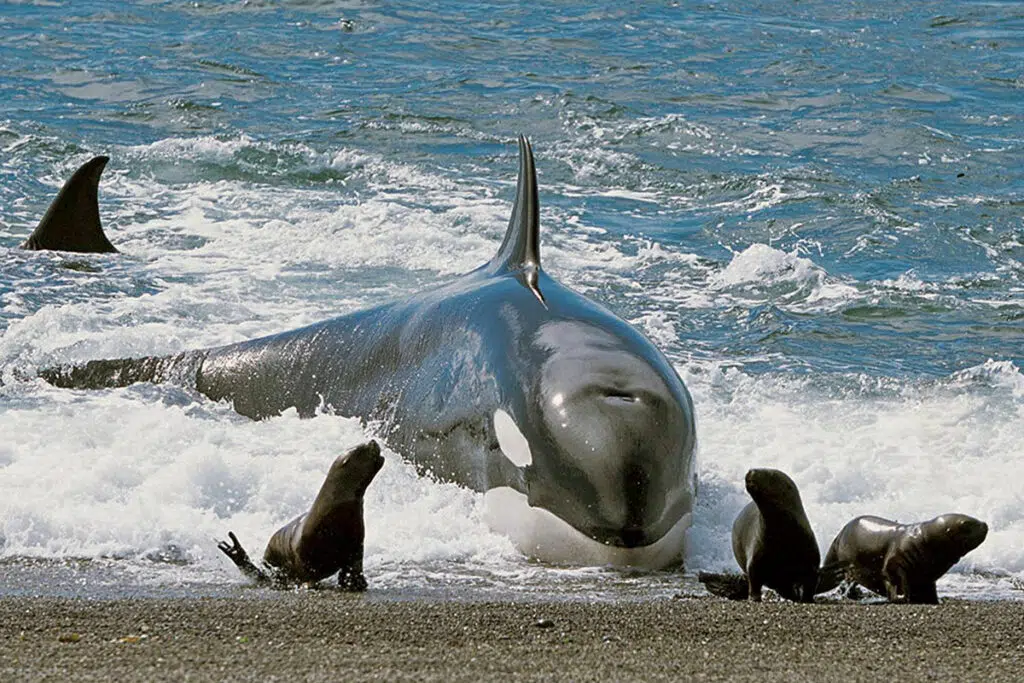
This is the most famous spot for spotting Peninsula Valdes orcas and the main spot for observing intentional stranding (if you are lucky). There is a dedicated public viewing area, ‘El Mirador’, at Punta Norte Fauna Reserve. The observation areas at El Mirador are located on top of the cliff above the sea lion colony, which affords an excellent view of the action below.
The time window for seeing intentional stranding behaviour is quite small, from early March to the end of April. This time corresponds with the pupping season of the Southern sea lions. You can see orcas at other times of the year, but they do not visit as regularly as during late February-May.
The time of the day is also an important factor. High tide periods are particularly favourable as orcas use the waves to beach themselves to catch seal lion pups. The optimal time is 3 hours before and after high tide. To calculate the time of high tide at Punta Norte, the Punta Norte Orca Research Center advises adding 3 hours and 20 minutes to the high tide time in Puerto Madryn.
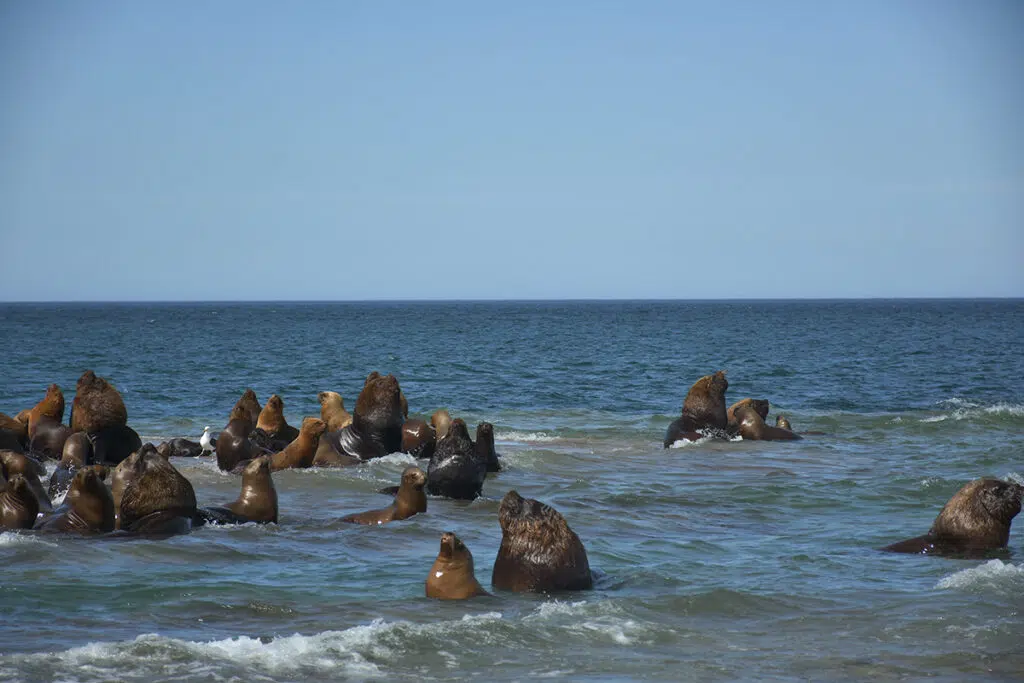
The view from El Mirador is expansive but fairly distant. If you hope to photograph orcas, you’ll need a decent telephoto lens. And to observe the action up close, consider bringing a pair of binoculars.
For professional photographers, there is an option to access the beach where orcas catch the seals, called The Attack Channel. This requires an expensive government permit to access the restricted area and the supervision of a park ranger whose job is to ensure that the animals are not disturbed by the photographers and filmmakers.
Caleta Valdes
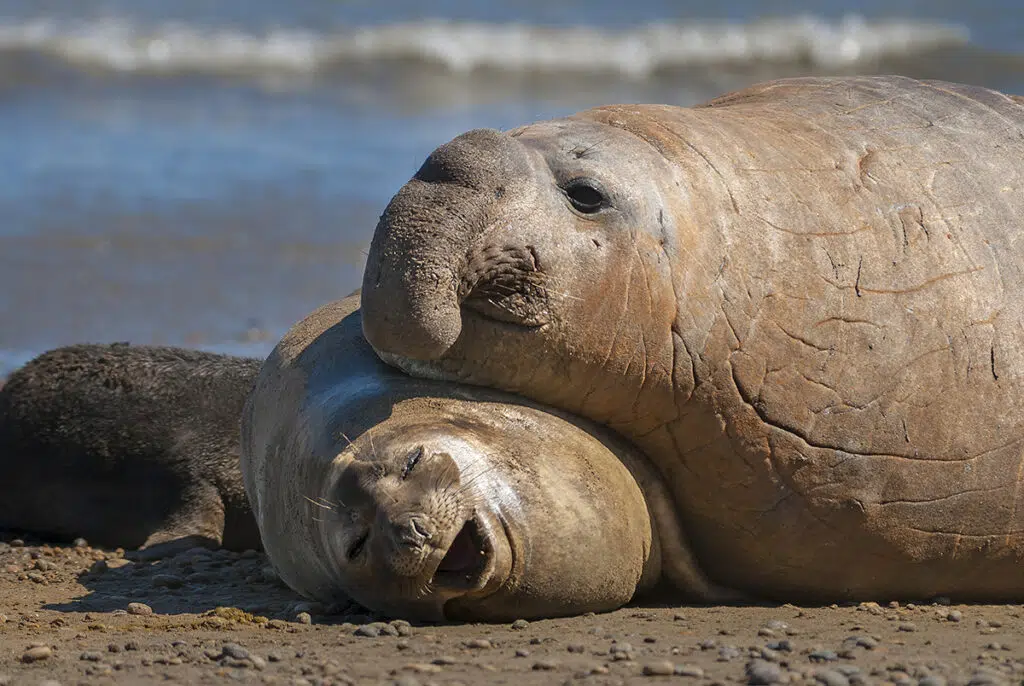
Another excellent location for spotting Peninsula Valdes orcas, especially from October to November/ December, when Elephant seal pups swim around in the shallow waters. While Punta Norte is all about sea lions, Caleta Valdes is about elephant seals.
Elephant seal pups are born in September, and by November-December, they are grown enough to enter the water, making them easy prey for orcas.
Like at Punta Norte, the best time to see orcas hunt is a couple of hours before and after the high tide.
Caleta Valdes is also visited on organized orca-watching tours from Puerto Piramides and Puerto Madryn.
Punta Delgada
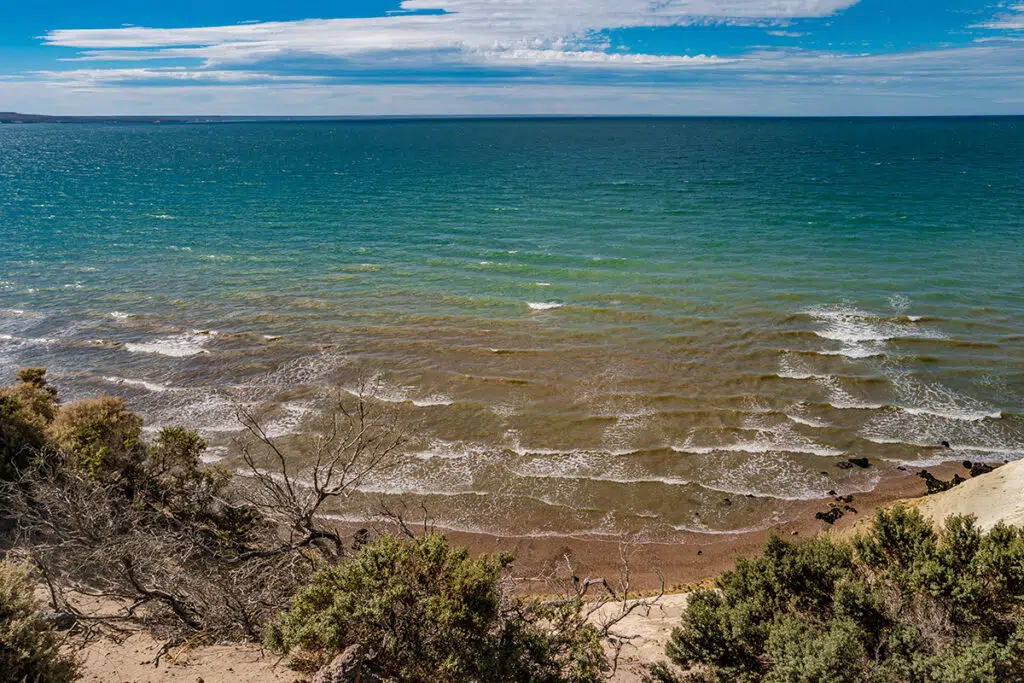
While less frequented by orcas compared to Punta Norte, this location still offers opportunities to see these magnificent creatures, especially when they are following their prey.
Like at Caleta Valdes, the best time to witness orcas hunting behavior is from September to November a few hours before and after high tide.
Where to see Peninsula Valdes orcas from a boat
Whale-watching boat cruises in Peninsula Valdes run between mid-June and December, with August to November being the best months for spotting orcas.
Puerto Piramides
This is a small town on the east coast of Peninsula Valdes where you can find several tour operators offering whale-watching tours. Most tours depart from the harbour and take you out to the open sea to see orcas, dolphins, and other marine wildlife.
Puerto Madryn
This city is located near Peninsula Valdes and is a popular destination for whale-watching tours. Most tours depart from the harbour and take you out to the open sea to see orcas, whales, dolphins, and other marine wildlife.
Other Wildlife of Peninsula Valdes
Peninsula Valdes is home to a wide variety of species that you can see in their native habitat, in addition to orcas. You can choose from a variety of Argentina Wildlife tours to see the Southern right whales (between July and November) when they gather around the Peninsula Valdes coast to mate and give birth to their calves. On the beaches and in the waterways, you can also spot fur seals, elephant seals, and sea lions relaxing or mating.

Also, a variety of bird species, such as the graceful albatross, the incredible oystercatcher, and the inquisitive penguin, can be seen on Peninsular Valdes. The Peninsula is a prime area for birding because many bird species use this area as a resting place during the migration season.
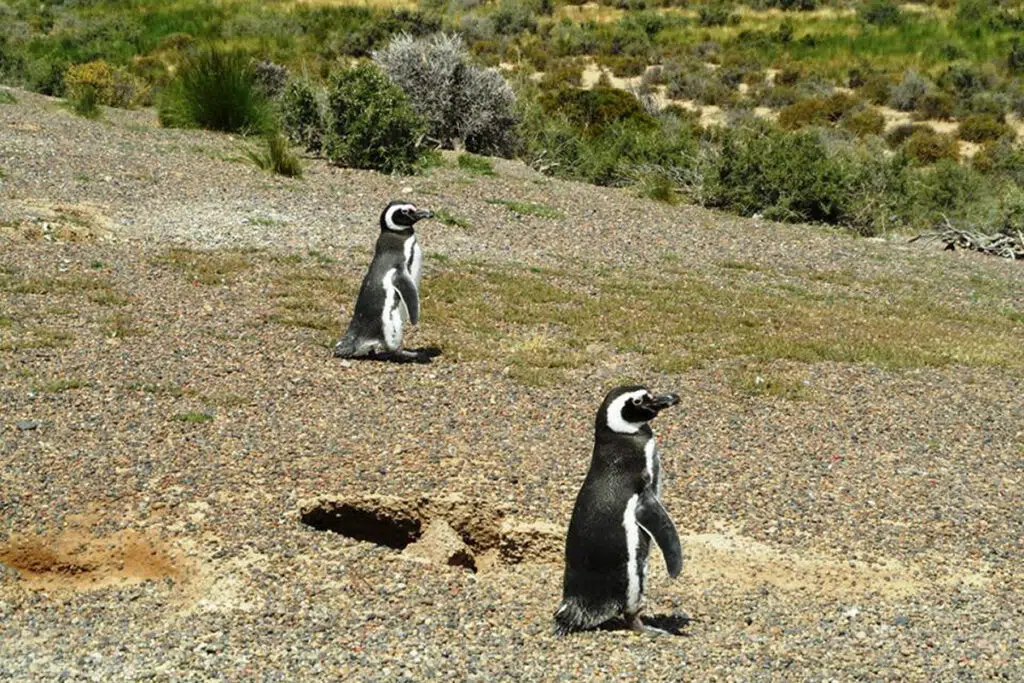
Out on the plains of Peninsula Valdes, you can see the guanacos and rheas – South America’s largest land birds.
While orcas may draw you to Peninsula Valdes, the region will surprise you with the amount of wildlife you can observe during your visit.
And if you are up for some further excitement, you can continue your explorations of Patagonia in Chile where you have a good chance of spotting a puma.