
North West Tasmania is the gateway to some of Tasmania’s most spectacular nature destinations like Cradle Mountain, Tarkine Drive, and the stunning beaches of the northwest coast. Gunns Plains Caves are a bit of a hidden gem despite being one of the earliest cave reserves in Tasmania, being proclaimed a State Reserve in 1918.
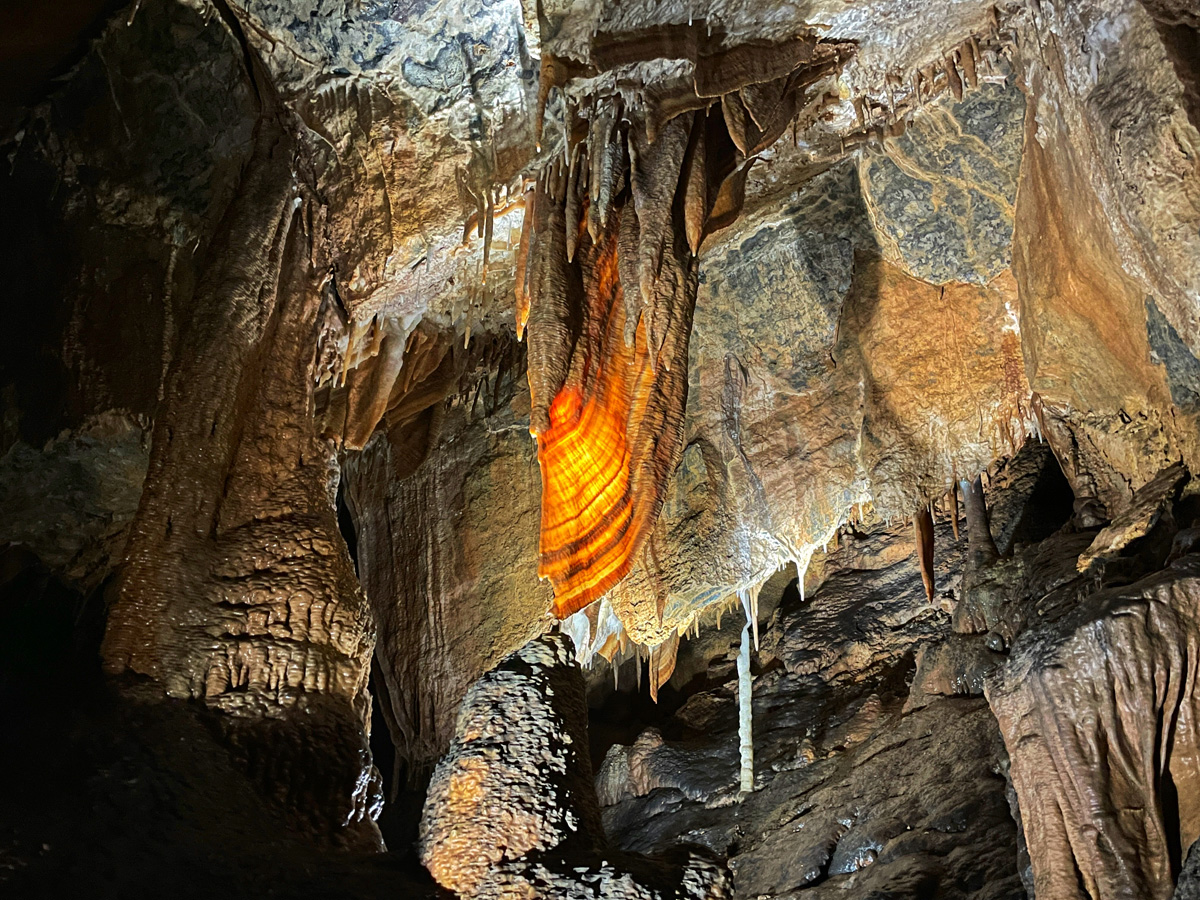
The caves are a sparkling labyrinth of calcite shawls and flowstones with an underground river running through them that is home to Giant Freshwater Lobster and Platypus.
Like most caves, Gunns Plains Cave was discovered by accident, when in 1906 a local farmer, Bill Woodhouse went chasing a possum that disappeared into a hole in the ground. Today, the caves can be visited on an organized tour for about an hour to see the incredible calcite formations that decorate its passageways. And if cave crystals are not tempting enough, there is also a colony of glow worms living in the cave.
How to get to Gunns Plains Caves
Gunns Plains Caves are located approximately 30 kilometres south of Ulverstone in north west Tasmania. It is a pleasant drive along a winding country road from the coast. We visited the caves during our stay at the Mountain Valley Wilderness cabins, so we approached them from the south, on the way from the Leven Canyon, which is another stunning hidden gem in the area (more on this at the end of the post).
Absolutely nothing gives away the presence of the caves in the landscape. We drove across atmospheric farmland and there were no rock faces in sight, and not a single hill that could be big enough to conceal a cave.
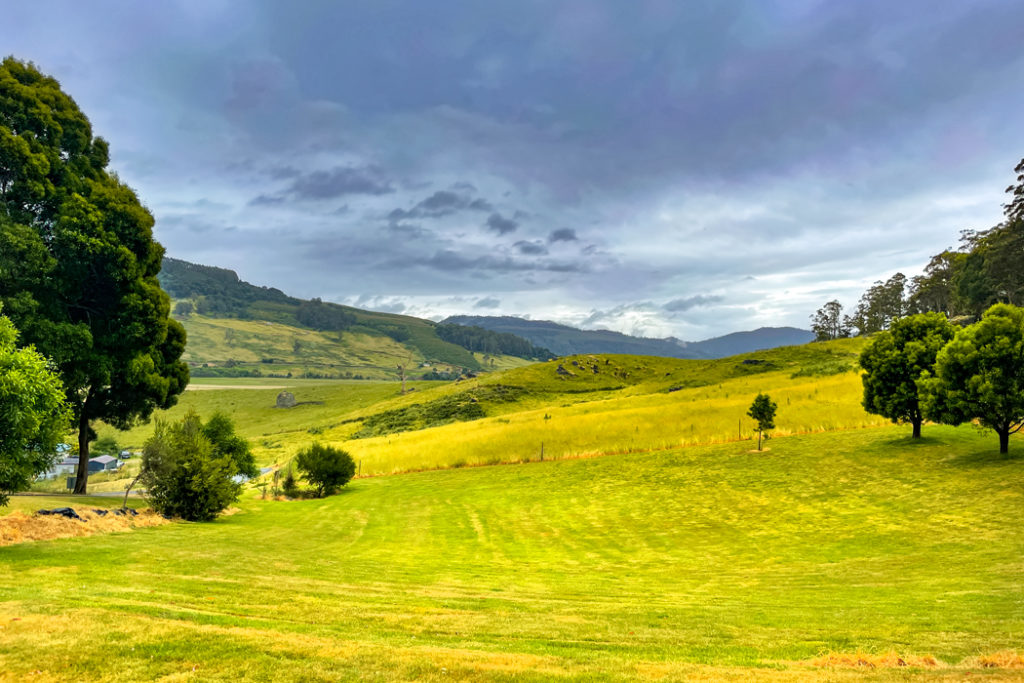
In my experience, caves are usually located in rocky or karst landscapes, like the Jenolan caves in Sydney’s Blue Mountains or Hastings caves in the Tasmanian southern forest. We couldn’t figure out where the Gunns Plains Caves would be hiding in the open farmland.
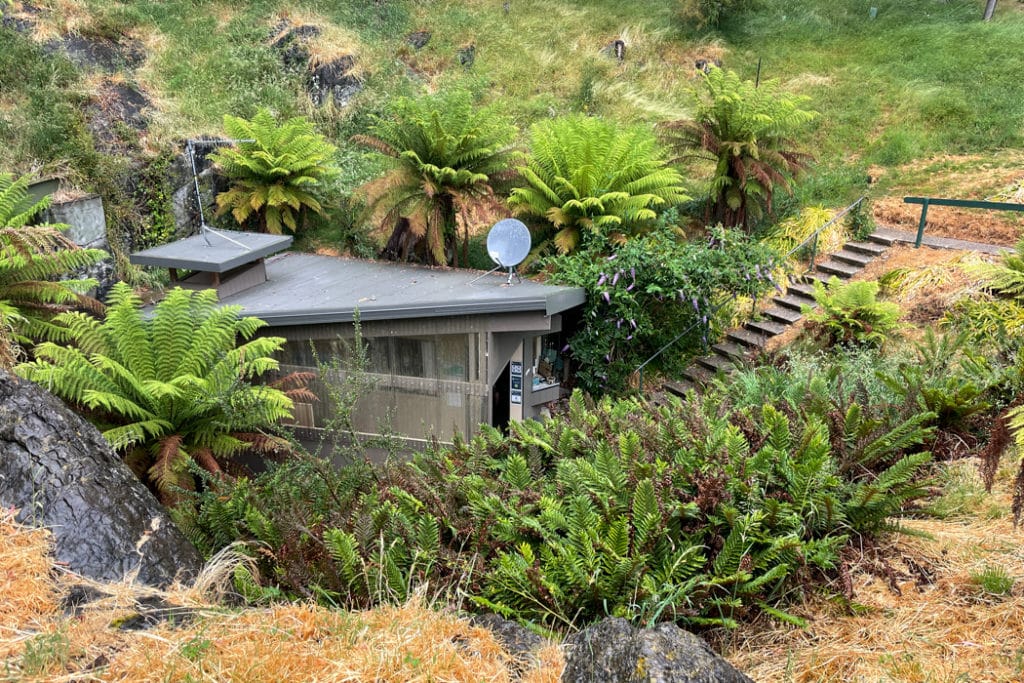
Thankfully, the signage is quite good and we found the caves car park without any trouble. And this is when we realized why we couldn’t see any signs of the caves – they are concealed underground.
Day Tour from Launceston to Gunns Plains Caves
If you don’t have your own set of wheels, or simply don’t wish to drive, you can visit Gunns Plains Caves on a day tour from Launceston. This small-group tour lasts about 8 hours and includes a visit to the striking Leven Canyon.
.
Gunns Plains Caves Tour
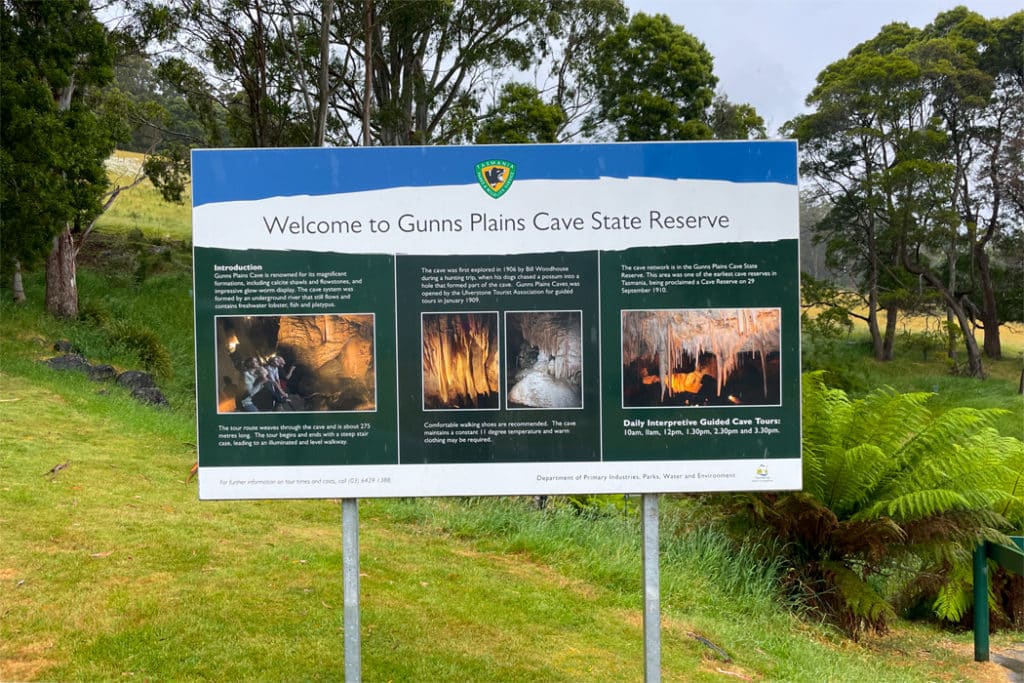
To explore Gunns Plains Caves we took a guided tour with a jolly cave guilds Geoff Deer. The tours run every day at 10 am, 11 am, 12 pm, 1.30 pm, 2.30 pm and 3.30 pm. But if you arrive after the start time, check at the reception – the tour may not have left yet. We got to the caves at about 12.15 pm and were just in time to join the 12 pm tour.
As with most caves, the tour starts with a descent to the floor of the cave. Of course, with an underground cave, the descent is a little more epic than usual. Down 54 steep metal steps, we all went into the cool darkness of the cave.
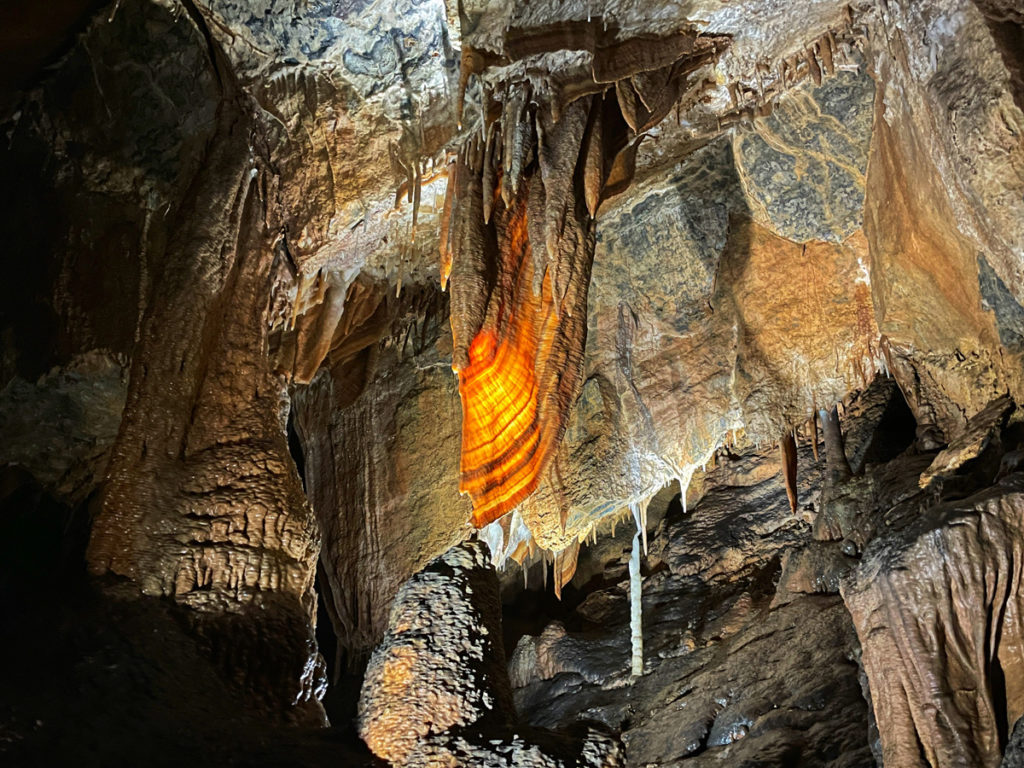
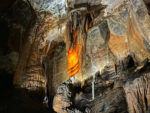
Once we reached level ground Geoff lead us through a 275 meter-long labyrinth of passageways decorated with stunning calcite shawls, straws, and flowstones. Shawls are some of the most striking formations you can see in a cave, and Gunns Plains Caves are known for their elaborate shawls.
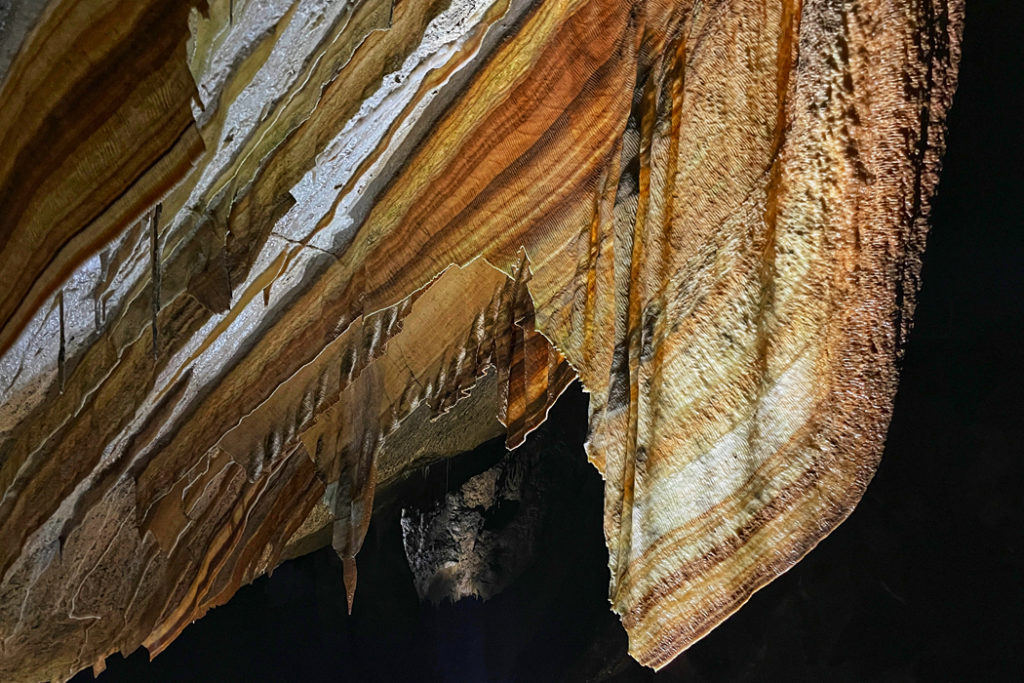
Shawls are created by water trickling down a rockface and depositing a narrow strip of calcite, that eventually results in a thin sheet, hanging down from the cave’s roof. As the water trickles down it doesn’t always follow the same path and as the trickle changes direction, over time, it creates interesting folds in the shawl formations. The colour bands in the shaws are caused by the minerals like iron oxide.
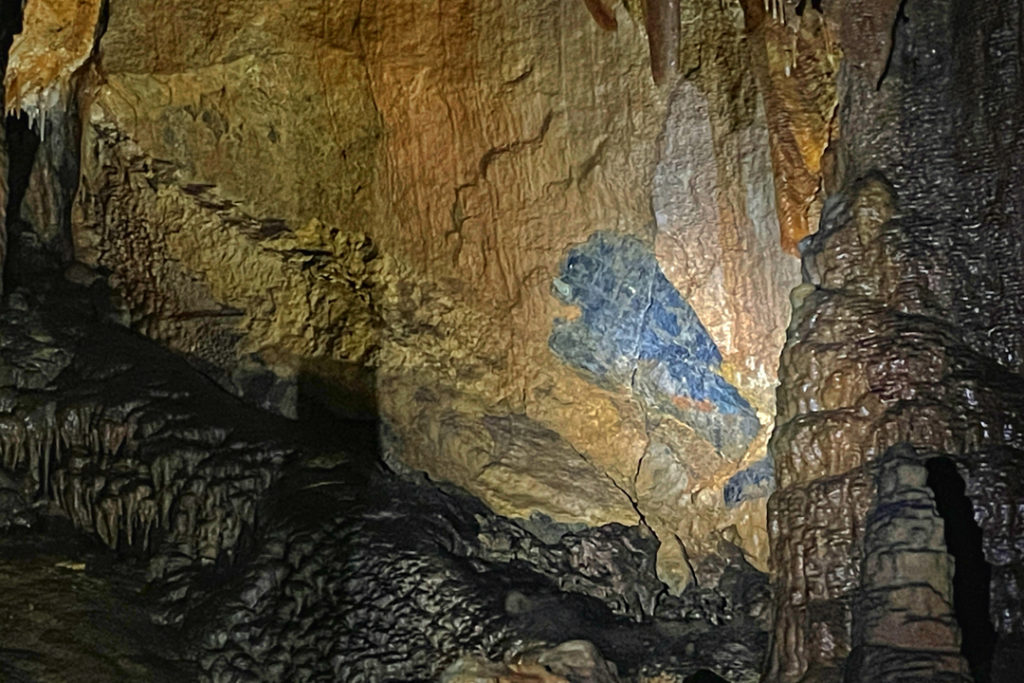
One of the most remarkable features in the cave is a natural pattern of rock deposit that looks so much like a painting of a bear that it’s hard to believe that you are not looking at early human cave painting. Of course, it would’ve been quite strange for pre-historic Australians to draw an image of a black bear they’d never seen, but the idea of nature drawing animal shapes on a cave wall is just as bizarre.
The underground river that carved out Gunns Plains Caves still flows through the cave and provides life-giving humidity to the cave’s environment. This humidity makes Gunns Plains Caves an appealing habitat for glow worms that can be found on the roof of the Brodies tunnel. The colony is not big, but the tiny insects still provide enough shine to light up the tunnel’s roof like a starry sky.
The river itself is home to the Giant Freshwater Lobster, fish and eel. Geoff also told us stories about exploring the furthest reaches of the cave, the areas accessible only to caving enthusiasts, and discovering at least 36 platypus burrows on the Sandy banks of the river. The pitch-black seclusion of the river seems to be popular habitat for these gorgeous monotremes.
There is a photo of one of these platypus pinned to the reception window. Of course, you are unlikely to spot a platypus on a cave tour, but if you are really keen to see them in the wild, head to the Tasmanian Arboretum in Eugenana (41 km away) – it is by far the best place to see platypus in Tasmania.
Around Gunns Plains Caves
The landscape of the Gunns Plains is mostly farmland with rolling green hills and winding country roads. But the plains are surrounded by large tracts of forest that hide all kinds of hidden gems
Preston Falls
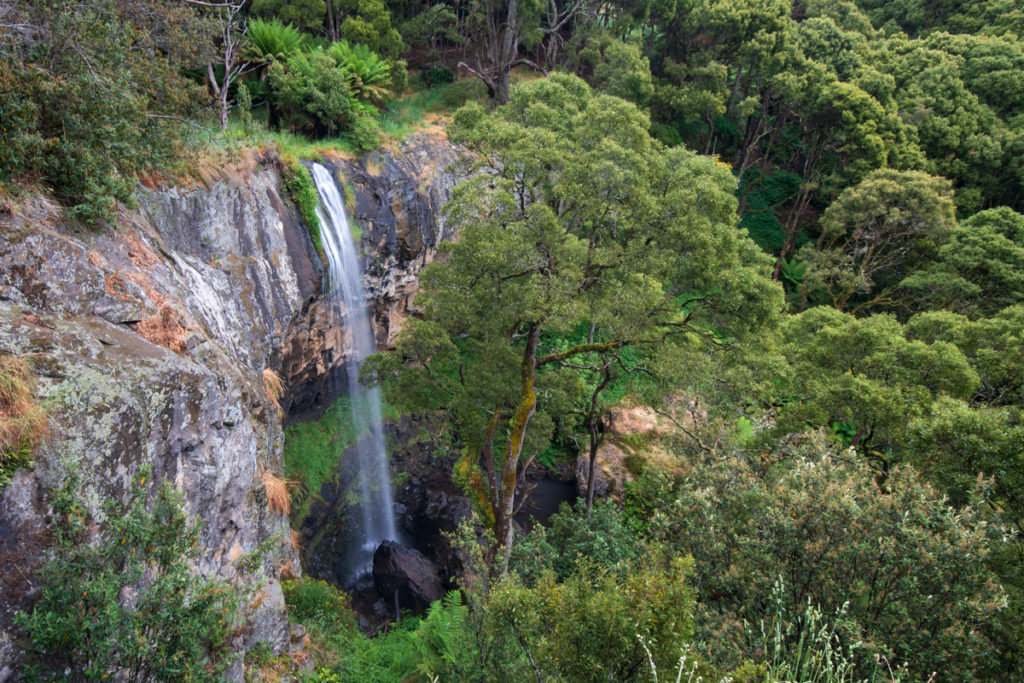
Only 9 km away from the caves, Preston falls is a gorgeous 25-meter waterfall surrounded by the lush blackwood forest. It’s only about a 5-minute walk from the road. The trail leads over a small bridge across Preston creek and brings you to the lookout at the top of the falls.
And unlike many of the waterfall-top lookouts that offer only a glimpse of the falls below, Preston falls lookout is set slightly to the side of the falls and gives you a beautiful view of the veil of the falls streaming down from the edge of the cliff to the forested valley below.
Leven Canyon
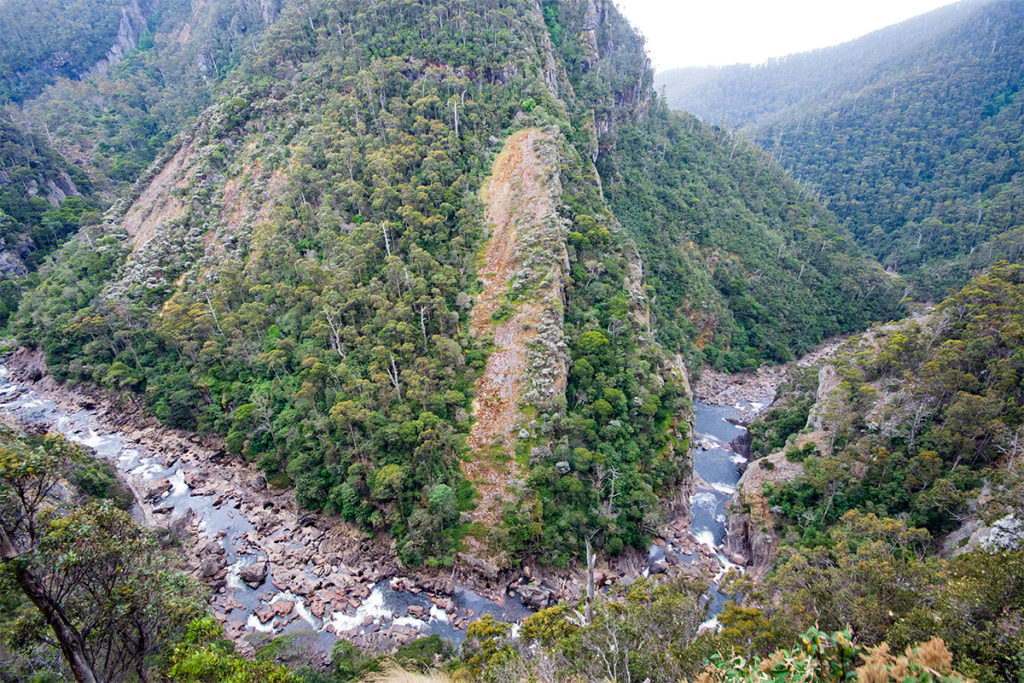
29 kilometres south of Gunns Plains Caves, Leven Canyon is a true hidden gem. The walking trail to the two lookouts at Leven Canyon is one of Tasmania’s Great Short Walks. And while the walk is indeed quite short, the lookouts from the edge of the canyon are jaw-dropping.
You can visit each of the lookouts on its own by 20 and 40-minute return trails. Or you could combine the two trails into one walk by taking the Forest Stairs. If you prefer to walk the stairs downhill, start the walk at Cruikshanks lookout. You can find more details and photos in my guide to Leven Canyon Walk.
Wings Wildlife Park
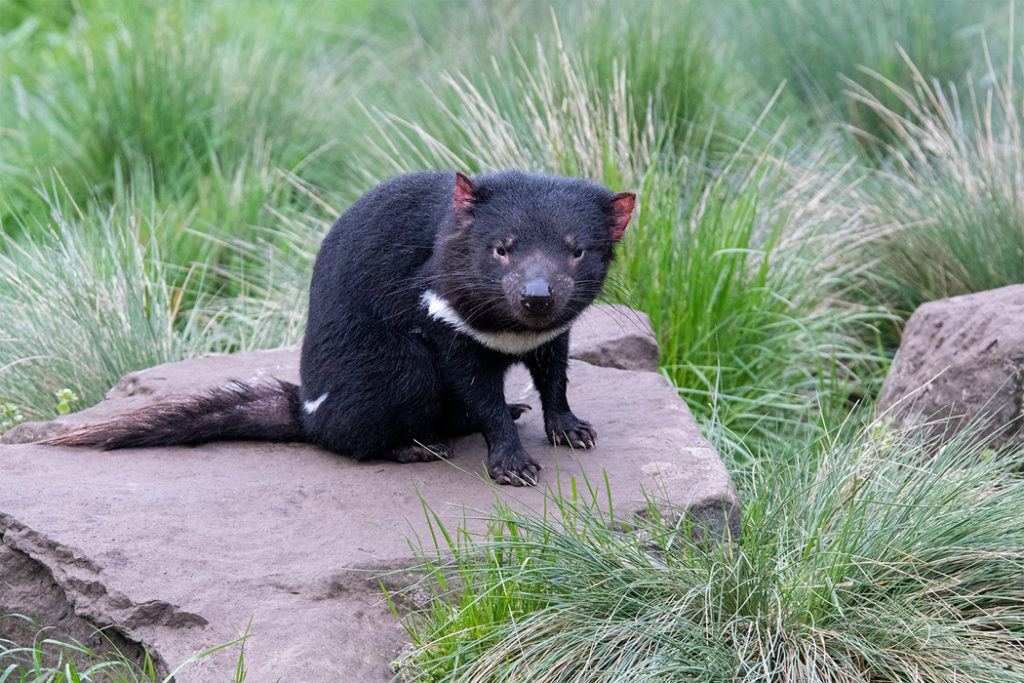
Just up the road from the caves in the well-known Wings Wildlife Park that offers up-close and personal encounters with many Australian native species, including Tasmanian devils, wombats and koalas. We didn’t enter the park itself, since we prefer to see animals in the wild (see below), but we had a delicious lunch at the park’s cafe – one of, if not the only one, cafes in the area.
Mountain Valley Wilderness Holidays
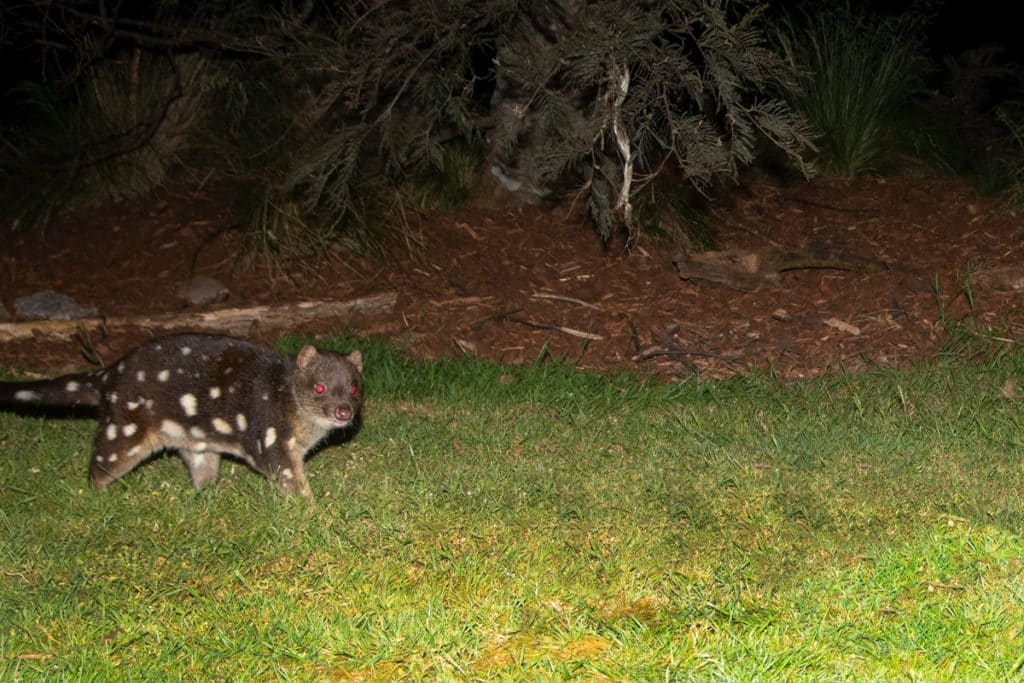
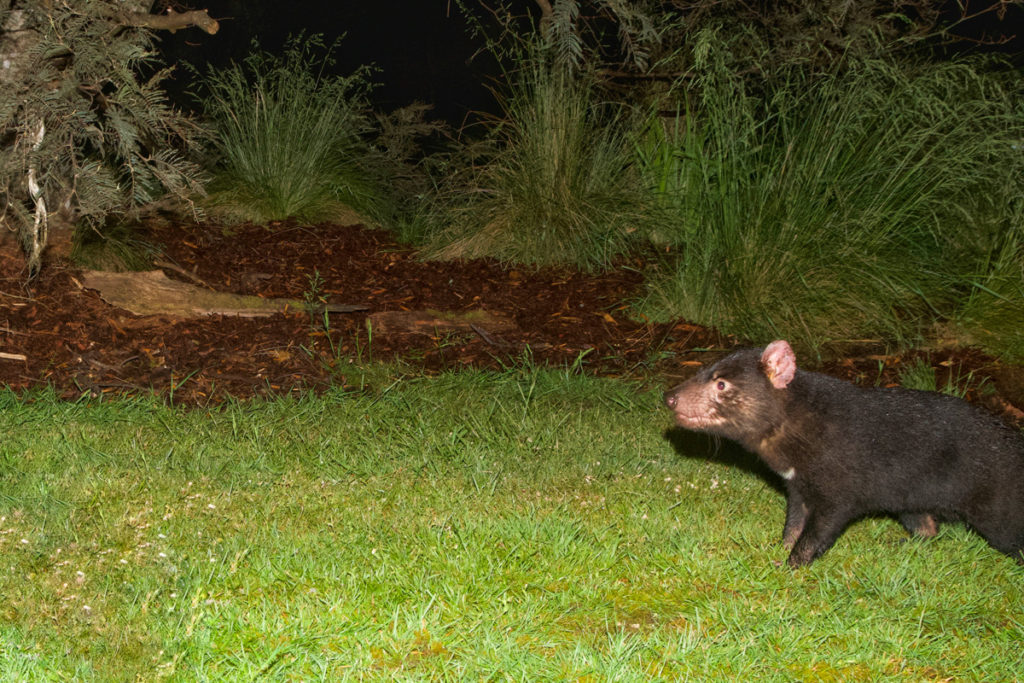
Mountain Valley Wilderness Holidays is a wonderful little-known reserve 34km south of Gunns Plains Caves where you stay in cozy log cabins and what wild Tasmanian devils and Spotted-tailed quolls come out of the forest to your cabin at night. The cabins are nestled in the 61-ha Private Nature Reserve, tucked away from the rest of the world in a gorgeous valley with the Leven River flowing through it.
We stayed at Mountain Valley log cabins for two nights and had some extraordinary wildlife-watching experiences there. You can read all about it in my review of Mountain Valley Wilderness Holidays.
More Nature & Wildlife Destinations in Tasmania
- Things to do in Cradle Mountain: Walks, Wildlife & Adventure

- 10 Best Day Trips from Hobart, Tasmania

- Tarkine Drive: 2-Day Itinerary, Attractions & Accommodation
- Things to Do on Bruny Island: Guide to Itinerary Planning
- 15 Best Things to Do in Launceston: Where to Play, Eat, and Stay
- North West Tasmania Travel Guide: Iconic Highlights & Local Secrets
- Mountain Valley Wilderness Holidays Review
- Travel Guide to Edge of the World, Tasmania
- Visiting Gunns Plains Caves in North West Tasmania

- Gorgeous Beaches in Tasmania: North-West Coast





Squeee Margarita I am loving your posts about Tassie. Gunns Plains Caves are sooooo cool, especially that bear painting! It is mad that that is natural!
I couldn’t believe it myself!
Those caves and that waterfall look incredible from your photos! I had never heard of Gunns Plains Caves, so thanks for teaching me something new today :). Xx Sara